Semantic Cache Policy Guide
Best practices for defining caching policies, setting TTLs, and scoping namespaces in similarity-based cache structures.
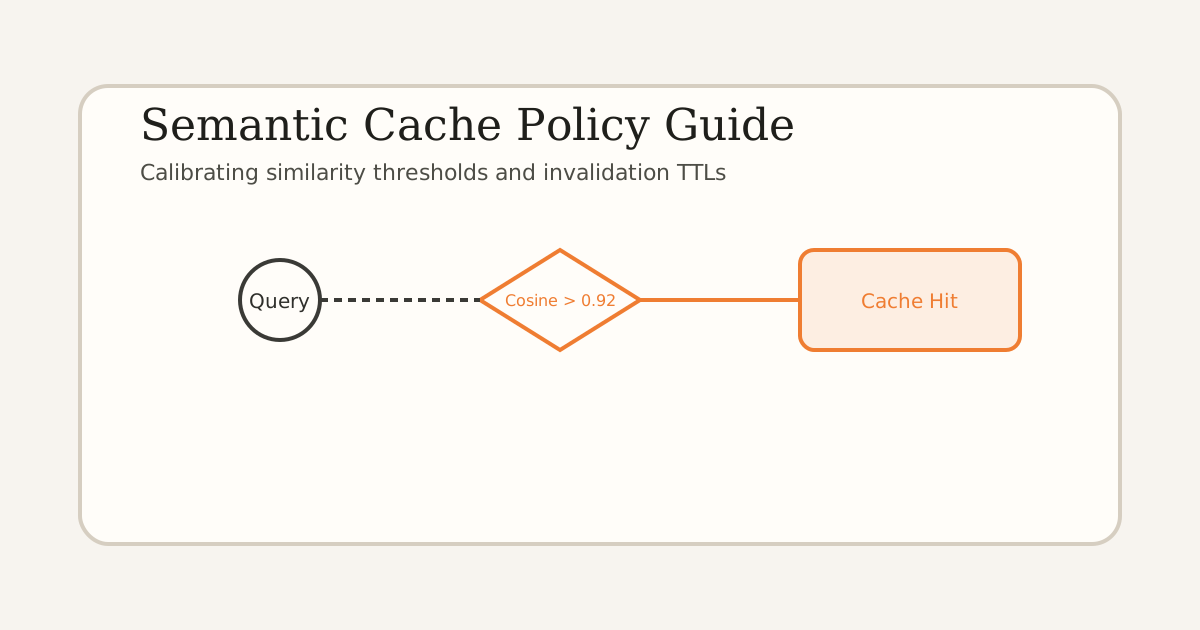
To operate a semantic cache safely at scale, engineering teams must establish clear cache governance policies. Unlike deterministic caches, a semantic cache cannot be evaluated solely on hits and misses; it requires monitoring for semantic drift and stale context.
The first step is establishing strict namespace partitioning. Queries should be isolated by user context or tenant role to prevent cached outputs from leaking between users. This is critical for data privacy and security.
Second, Time-To-Live (TTL) values must be kept conservative. While a static data cache can survive for days, a semantic cache driving RAG outputs should expire within hours, forcing a fresh model evaluation and RAG retrieval to prevent context decay.
For more on similarity matching mechanics and cache invalidation workflows, see the flagship guide Semantic Caching for Probabilistic Systems.