SDK Migration Guide (v2 to v3)
An OpenAI SDK v3 migration guide with breaking changes, test plan, and rollback strategy.
0. Why this guide exists
SDK upgrades are a trust moment. This guide upgrades teams from OpenAI SDK v2 to v3 with zero downtime and verified behavior parity.
Breaking changes cause regressions and surprise outages.
Stable upgrade with monitored rollout and rollback plan.
Zero downtime migration.
1. Migration model (Diff -> Tests -> Rollout)
Identify breaking changes and API surface updates.
Validate top flows and error mapping.
Canary first, then staged production.
2. Release overview (governance first)
Upgrade goal: zero downtime with verified behavior parity across core flows.
3. Breaking changes (isolation and safety)
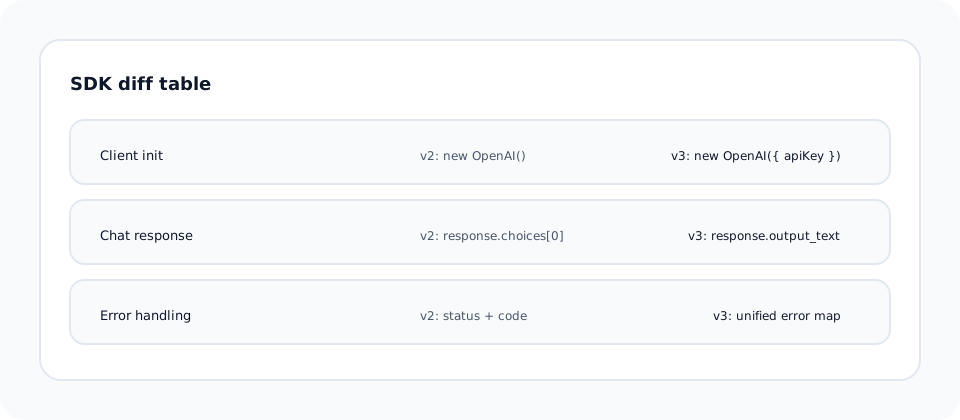
- Client initialization now uses the new SDK constructor.
- Responses are typed differently across chat endpoints.
- Error structures are normalized and require new handling.
4. Migration steps (learning before building)
- Upgrade the SDK and pin the new version.
- Update client initialization and response parsing.
- Validate streaming handlers for new types.
- Run test suite with updated error expectations.
5. Rollout strategy (proof of access)
- Canary to 5 percent traffic for 48 hours.
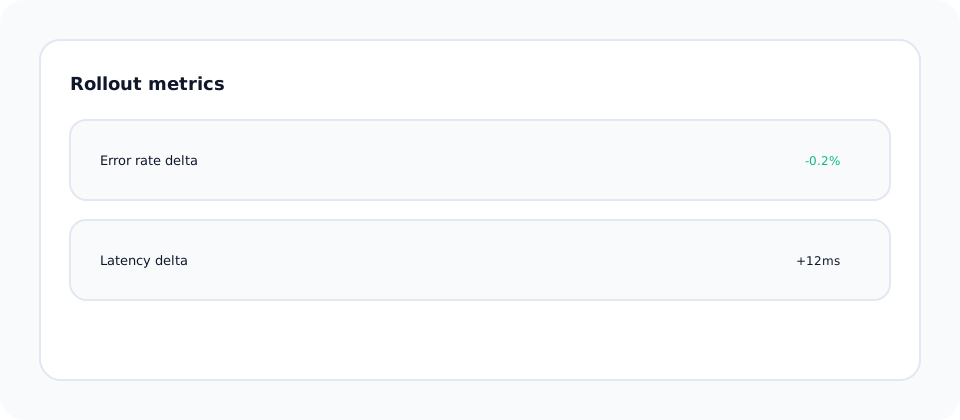
- Track latency, error rate, and cost deltas.
- Promote to production once metrics stabilize.
6. Guardrails and limits (preventing early failures)
Lock version pins and require rollback approval for high-risk flows.
7. Common failure modes (what breaks in real orgs)
Upgrades roll into prod without validation.
Critical flows not covered in regression suite.
No clear rollback owner or path.
8. What "ready" actually means
- Tests: Top flows validated with new SDK.
- Rollback: Version pin rollback path documented.
- Monitoring: Metrics tracked during rollout.
- Ownership: Migration owner assigned.
Business impact: Reliable upgrades without customer impact.
Author note
Migration guides are a trust moment. I focus on clarity, testability, and rollback safety.