Prompt Safety Checklist
A Bedrock Guardrails checklist for prompt design, review, and governance.
0. Why this guide exists
Prompts are a policy surface. This checklist uses Bedrock Guardrails to keep prompts safe, reviewable, and consistent across teams.
Prompts change without review, causing policy drift.
Consistent prompt quality and fewer unsafe outputs.
Reviewable prompts at scale.
1. Guardrails model (Policy -> Prompt -> Review)
Leadership layer defines limits.
Developer layer implements safe defaults.
Enablement layer validates and logs.
2. When to use this (governance first)
- New prompt templates for production workflows.
- High-risk prompts involving customers or sensitive data.
- Cross-team prompt reuse.
3. Checklist (isolation and safety)
- Does the prompt avoid PII or restricted data?
- Is the output expectation explicit and measurable?
- Are constraints visible to the model?
- Is there a fallback for uncertainty or refusal?
- Has this prompt been reviewed and logged?
4. Review protocol (learning before building)
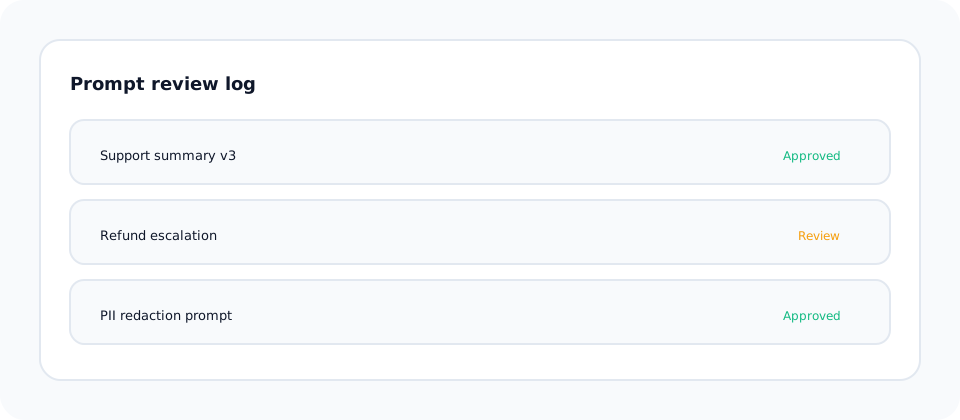
Outcome: Every prompt change is auditable before release.
- Assign an owner and reviewer for every prompt.
- Run tests with edge cases before approval.
- Log approval date and next review date.
5. Guardrails alignment (proof of access)
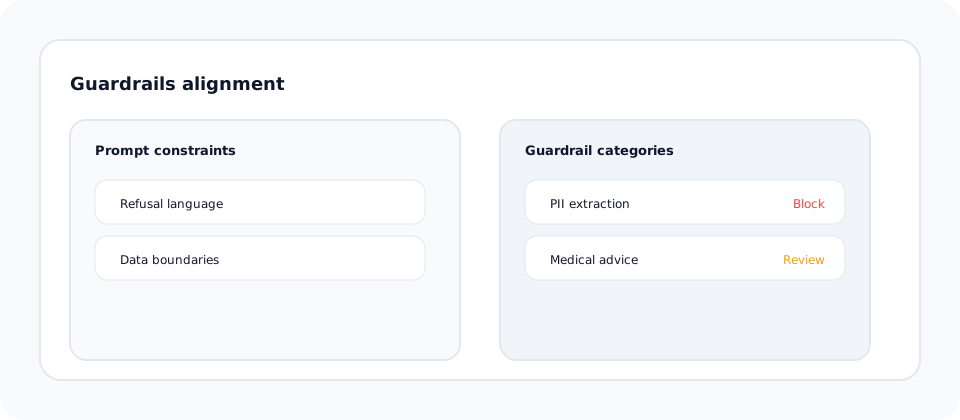
Ensure prompts align with Bedrock Guardrails categories and thresholds.
6. Guardrails and limits (preventing early failures)
Prompt constraints align to guardrail categories.
Prompt changes require review and release notes.
All exceptions logged for audit.
7. Common failure modes (what breaks in real orgs)
Constraints are missing or unclear.
Prompts cannot be audited after incidents.
Prompts conflict with policy filters.
8. What "ready" actually means
- Review: Prompt owners and reviewers assigned.
- Policy: Guardrails aligned to org rules.
- Logging: Exceptions recorded and reviewed.
- Cadence: Quarterly prompt audits scheduled.
Business impact: Lower risk and higher trust in AI outputs.
Author note
A checklist is a training tool. I write it so a new team member can understand the intent in one pass.