Model Evaluation Report
A SageMaker + Bedrock evaluation report that blends metrics, cost, and risk into a decision-ready brief.
0. Why this guide exists
Model selection decisions fail when they are based on anecdotes. This report uses SageMaker evaluation + Bedrock models to deliver a decision-ready comparison.
Teams pick models without measurable tradeoffs.
Clear recommendation with cost, latency, and risk visibility.
Decision clarity for leadership.
1. Evaluation model (Tasks -> Metrics -> Risk)
Customer support summarization, classification, and rewrite.
Accuracy, latency, cost per call, refusal rate.
PII leakage, hallucination rate, compliance flags.
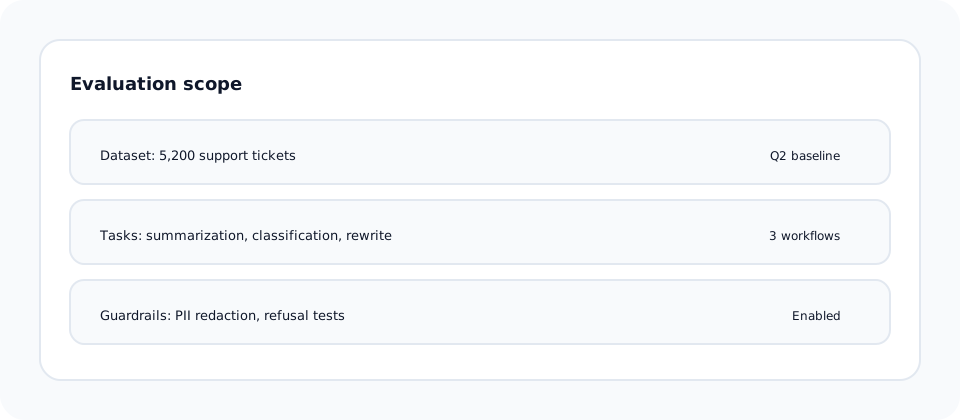
2. Scope and baseline (governance first)
Decision focus: cost, latency, and risk profile for high-volume support workflows.
3. Metrics snapshot (isolation and safety)
Accuracy 0.82, latency 750ms, cost $0.004 per call.
Accuracy 0.87, latency 1100ms, cost $0.006 per call.
Model A for production, Model B for research workflows.
4. Qualitative review (learning before building)
- Model A more consistent with guardrail prompts.
- Model B more verbose but higher hallucination risk.
- Model A meets SLA without retries.
5. Cost and latency impact (proof of access)
- Model A reduces monthly cost by 28% at current volume.
- Model B increases latency beyond SLA on 12% of calls.
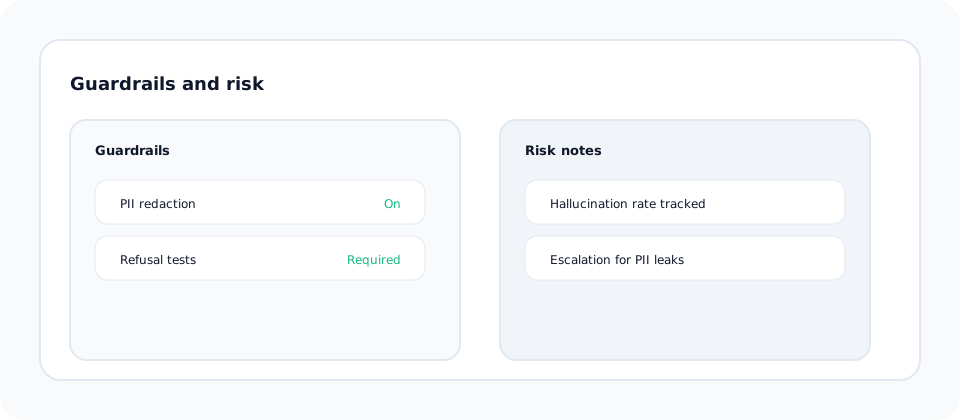
6. Guardrails and limits (preventing early failures)
Both models require prompt guardrails, but Model B needs stricter refusal handling.
7. Common failure modes (what breaks in real orgs)
Ignoring latency and cost until production.
Hallucination and PII leakage untested.
Evaluations become stale within weeks.
8. What "ready" actually means
- Decision: Model selected with written rationale.
- Risk: Guardrails and refusal handling documented.
- Cadence: Quarterly re-evaluation scheduled.
- Ownership: Evaluation owner assigned.
Business impact: Faster decisions with fewer production reversals.
Author note
Evaluation reports should read like executive briefs. The reader needs a decision, not a data dump.