Change Communication Brief (exec + ICs)
A Microsoft ecosystem change-brief for executives and employees during AI rollout.
0. Why this guide exists
AI rollouts fail when messaging is vague or inconsistent. This brief provides Microsoft-first executive and employee communications for a safe AI adoption program.
Rumor loops and unclear direction slow adoption.
Aligned messaging, higher trust, and fewer escalations.
One narrative across leadership and teams.
1. Message architecture (Why -> What -> How)
AI reduces friction and improves quality for teams.
Copilot + Foundry with safe usage standards and training.
Phased rollout with clear boundaries and escalation paths.
2. Executive statement (governance first)
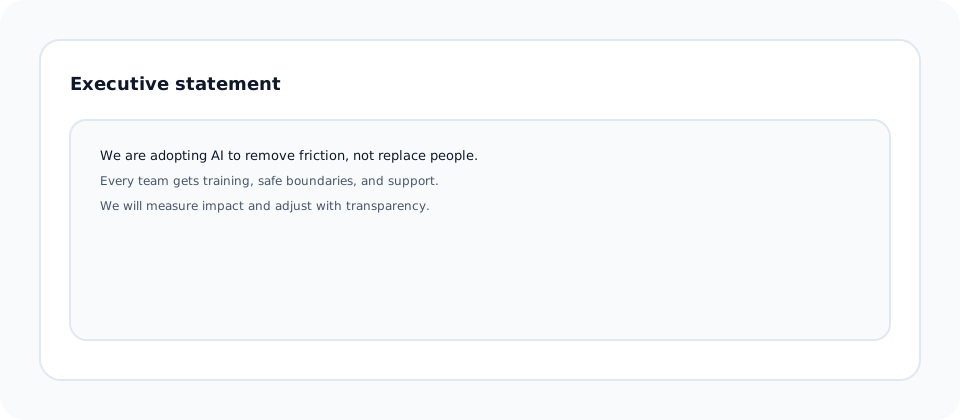
Short message: We are adopting AI to remove friction, not to replace people. Every team will receive support, training, and clear boundaries for safe usage.
Proof points: faster response time, improved quality checks, clearer documentation.
3. Employee talk track (isolation and safety)
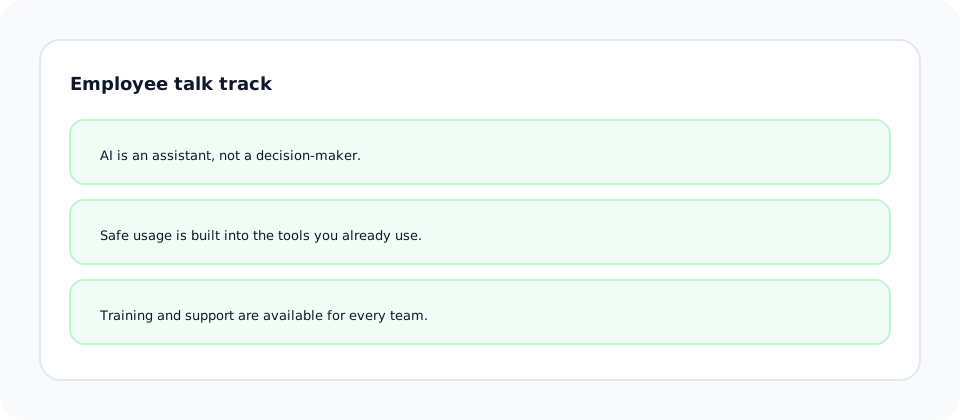
- AI is an assistant, not a decision-maker.
- Safe usage is built into the tools you already use.
- Every employee can opt into training and support.
4. FAQ highlights (learning before building)
- What data can I use with Copilot?
- What happens if AI makes a mistake?
- Where do I ask for help?
5. Channel plan (proof of access)
Outcome: Every team hears the same message at the right time.
- Exec email announcement + FAQ link.
- Team lead briefings with slide deck.
- Follow-up Q&A sessions at 30 and 60 days.

6. Guardrails and limits (preventing early failures)
Messaging must make guardrails visible, not hidden:
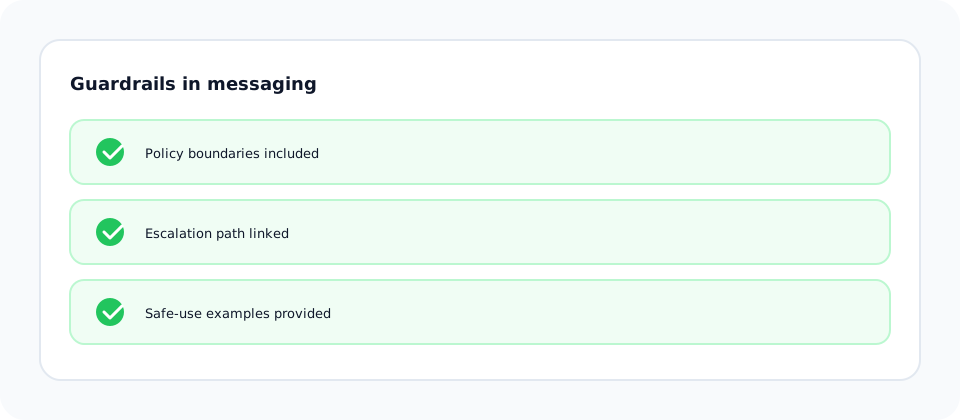
- Clear policy boundaries in every channel.
- Escalation path linked in all comms.
- Safe-use examples included with every update.
7. Common failure modes (what breaks in real orgs)
Teams hear different rules from different leaders.
Employees avoid AI due to unclear expectations.
Leaders promise outcomes the platform cannot deliver.
8. What "ready" actually means
- Alignment: Exec and IC messages share the same narrative.
- Support: FAQ and escalation path are published.
- Cadence: Updates scheduled at 30/60/90 days.
- Measurement: Adoption and sentiment tracked.
Business impact: Higher trust and smoother adoption across teams.
Author note
Clear internal messaging prevents rumor loops. I write for real questions, not abstract alignment statements.