API Quickstart + SDK Guide
A Bedrock-first quickstart that gets teams to a working, logged integration in under 30 minutes.
0. Why this guide exists
A quickstart is the first trust moment. This guide gets developers onto AWS Bedrock quickly with safe defaults, logging, and error handling from the first call.
Teams copy snippets without retries or logging.
Working integration with observability in under 30 minutes.
Fast and safe first call.
1. Bedrock mental model (Runtime -> Model -> Call)
bedrock-runtime is where requests are sent.
Use explicit model IDs to control cost and behavior.
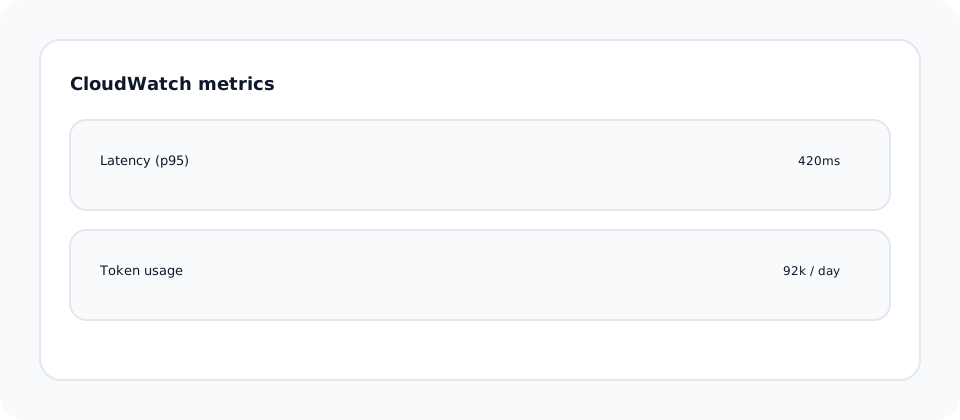
Every call should be logged with latency and cost metadata.
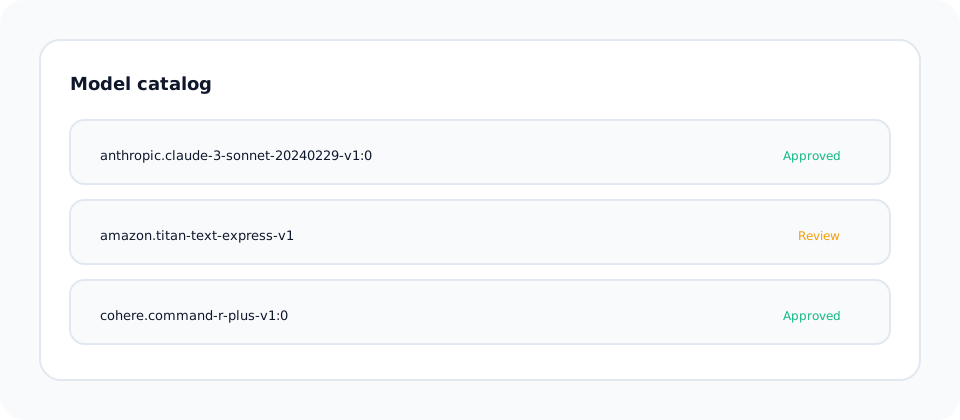
2. Access setup (governance first)
Outcome: Least-privilege access with traceability.
- Create an IAM role with Bedrock runtime permissions.
- Store credentials in a secrets manager.
- Enable CloudWatch logging for request metadata.
3. Quickstart (first call)
import json
import boto3

client = boto3.client("bedrock-runtime", region_name="us-east-1")

payload = {
  "prompt": "Draft a customer email with three options.",
  "max_tokens_to_sample": 200,
  "temperature": 0.2
}

response = client.invoke_model(
  modelId="anthropic.claude-3-sonnet-20240229-v1:0",
  body=json.dumps(payload)
)

result = json.loads(response["body"].read())
print(result["completion"])
import { BedrockRuntimeClient, InvokeModelCommand } from "@aws-sdk/client-bedrock-runtime";
const client = new BedrockRuntimeClient({ region: "us-east-1" });
const payload = {
prompt: "Draft a customer email with three options.",
max_tokens_to_sample: 200,
temperature: 0.2
};
const command = new InvokeModelCommand({
modelId: "anthropic.claude-3-sonnet-20240229-v1:0",
body: JSON.stringify(payload),
contentType: "application/json",
accept: "application/json"
});
const response = await client.send(command);
const result = JSON.parse(new TextDecoder().decode(response.body));
console.log(result.completion);4. Errors and retries (learning before building)
Define baseline retry and fallback rules before you ship:
- 429: exponential backoff and retry.
- 5xx: fail over to fallback model or return safe message.
- Policy refusal: log prompt and notify owner.
5. Logging and metrics (proof of access)
Outcome: Every call is traceable from day one.
- Log request ID, model ID, latency, and token usage.
- Tag logs by environment (dev, staging, prod).
- Track cost per model and per workload.
6. Guardrails and limits (preventing early failures)
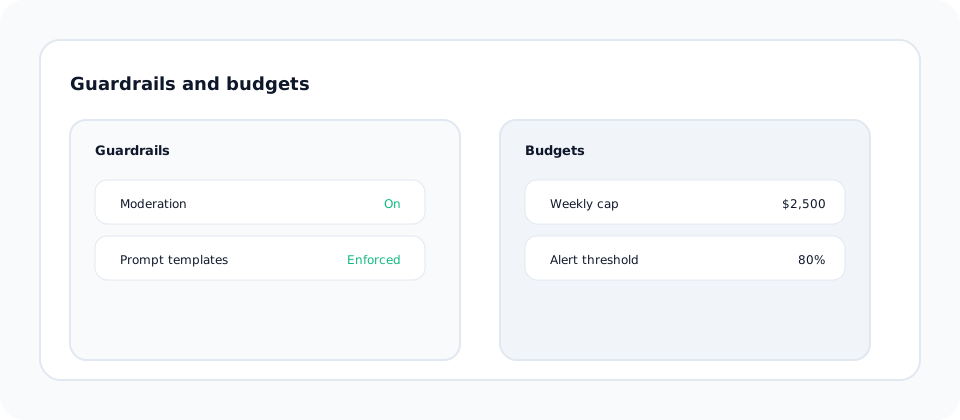
Enable guardrails and enforce usage limits early:
Enable Bedrock Guardrails or moderation for risky content.
Set daily or weekly spend alerts by project.
Prevent spikes and stabilize latency.
7. Common failure modes (what breaks in real orgs)
Usage grows without budgets or alerts.
No backoff leads to cascading failures.
Missing logs slow down incident response.
8. What "ready" actually means
- Access: IAM role is scoped and auditable.
- Safety: Guardrails enabled for risky prompts.
- Operational: Logging and alerting are active.
- Cost: Budgets and alerts are configured.
Business impact: Faster onboarding, fewer incidents, and higher developer trust.
Author note
A quickstart should prove the integration is real and safe. I prioritize fast success with operational guardrails built in.