AI Knowledge Base Audit
A Confluence + Jira audit to reduce AI documentation drift and improve findability.
0. Why this guide exists
AI documentation decays fast. This audit framework uses Confluence + Jira to keep knowledge current, findable, and owned.
Conflicting docs create support tickets and mistrust.
Cleaner knowledge base and fewer duplicate answers.
Trustworthy docs.
1. Audit model (Inventory -> Scoring -> Remediation)
Catalog AI docs by type, owner, and traffic.
Score for accuracy, findability, and freshness.
Prioritize fixes by risk and traffic impact.
2. Audit goals (governance first)
- Remove outdated or conflicting guidance.
- Improve findability for common questions.
- Clarify ownership and review cadence.
3. Audit dimensions (isolation and safety)
Does the content match current product behavior and policy?
Can users locate the correct answer in under 3 clicks?
Each doc has a clear owner and review date.
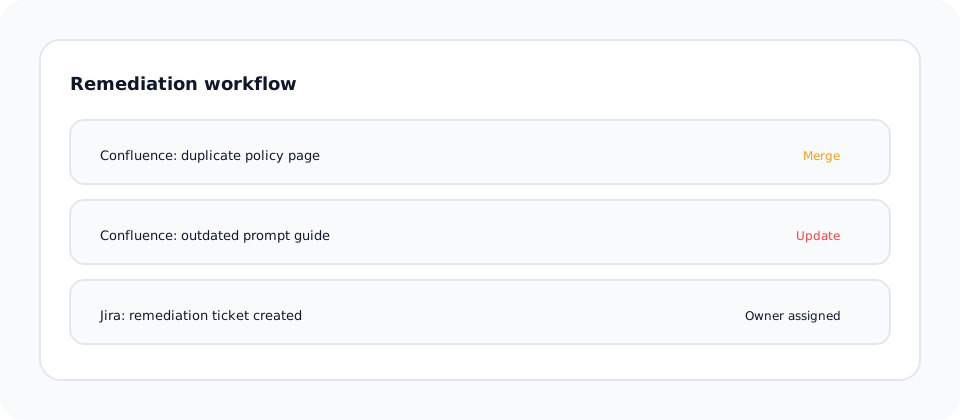
4. Remediation workflow (learning before building)
- Tag duplicates and consolidate into the canonical doc.
- Mark outdated sections and request SME review.
- Update navigation and search keywords.
- Create Jira tickets for each remediation item.
5. Ownership model (proof of access)
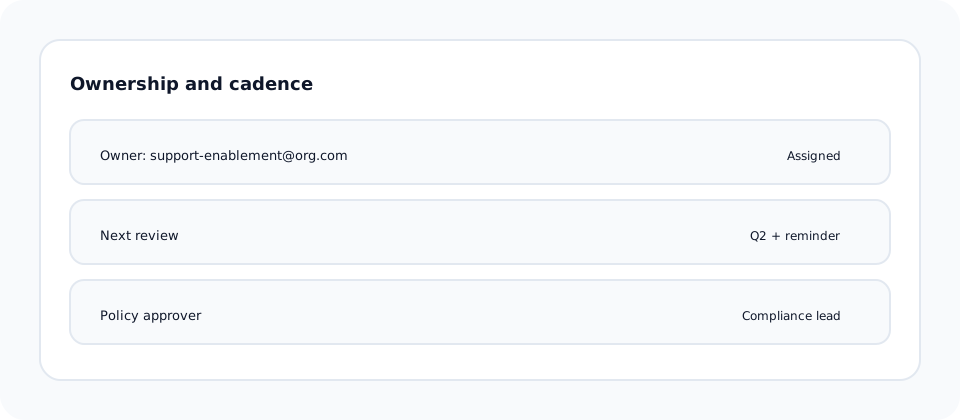
- Assign a doc owner and reviewer.
- Set a review date and reminder cadence.
- Document who approves policy changes.
6. Guardrails and limits (preventing early failures)
Publish a governance page for AI docs with ownership, review cadence, and escalation.
7. Common failure modes (what breaks in real orgs)
No owner, no review date.
Multiple sources for the same answer.
Keywords do not match user language.
8. What "ready" actually means
- Inventory: AI docs catalog is complete.
- Ownership: Every doc has an owner and review date.
- Remediation: Jira backlog exists for fixes.
- Cadence: Quarterly audit schedule published.
Business impact: Lower support load and higher doc trust.
Author note
Audits keep knowledge bases trustworthy. I treat them as product maintenance, not cleanup work.